
Engineering · Comparison
MIC-6 vs ATP-5 vs 6061-T6 plate.
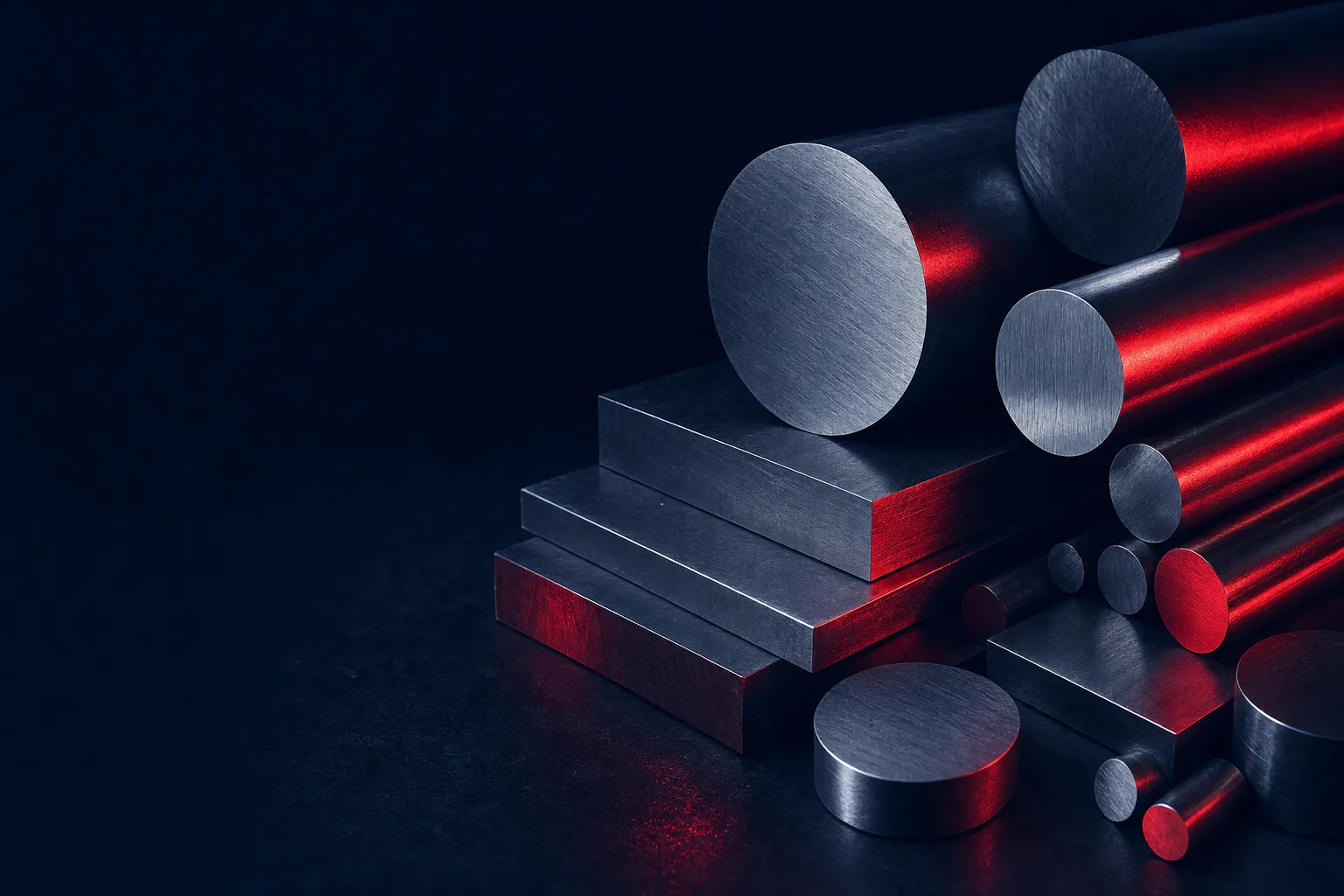
Three aluminum plate stocks for machined plate parts. Two are cast (MIC-6, ATP-5) and stress-free; one is wrought (6061-T6) and cheaper. The choice comes down to whether dimensional stability over time matters more than the cast-plate price premium (~1.4× 6061 per pound).
| Property | MIC-6 | ATP-5 | 6061-T6 plate |
|---|---|---|---|
| Type | Cast plate | Cast plate | Wrought plate |
| Manufacturing | Slow-cooled DC cast | Slow-cooled DC cast | Hot-rolled, then stretch-relieved |
| Internal stress | Near-zero | Near-zero | Low (T651/T7351), but not zero |
| Long-term stability | Excellent | Excellent | Good for structural; not optical-grade |
| Surface finish (mill) | Mirror (machined both sides) | Mirror (precision-milled) | Mill scale; needs machining |
| Flatness (as-shipped) | 0.005″/ft typical | 0.003″/ft typical | Variable; not typically called out |
| Density | 2.80 g/cc | 2.66 g/cc | 2.70 g/cc |
| Strength (UTS) | ~165 MPa | ~283 MPa | ~310 MPa (T6) |
| Cost vs 6061 | ~1.4× per lb | Similar to MIC-6 | 1× baseline |
| Best for | Optical mounts, metrology fixtures, vacuum hardware | Same + tighter flatness | Structural, machined parts where stability isn't critical |
Why this matters
Wrought plate has internal stress.
6061 plate is usually supplied as T651 — stress-relieved by controlled stretching — which reduces but does not eliminate residual stress. When you machine a part out of it, those stresses release asymmetrically — and the part keeps moving for weeks after it leaves the shop.
MIC-6 and ATP-5 are different. The molten metal is poured into a mold, slow-cooled in place, then both faces are precision-milled at the mill. Internal stresses are essentially zero from the casting process forward. Machine it however you want — the part stays where you put it.
For the cost of a single warranty replacement on an unstable optical fixture, you can buy several MIC-6 blanks.
Decision rule
Pick by the requirement.
- Long-term flatness or parallelism < 0.0005″ → cast plate.
Optical mounts, sensor frames, metrology fixtures, vacuum hardware. MIC-6 is the workhorse; ATP-5 is the upgrade for tighter as-shipped flatness.
- Structural plate, no stability concern → 6061-T6.
Brackets, fixtures, plates that will see service stress higher than residual stress can release. Cheaper, stronger, easier to source thick.
- Need stability AND structural strength? → T7351 wrought + symmetric cuts.
7075-T7351 is stretch-relieved wrought plate with overaged temper. Better stability than T6 wrought, much higher strength than cast plate. But not as stable as MIC-6.
- Cast plate has lower strength.
~165 MPa UTS for MIC-6 and ~283 MPa for ATP-5 (5083-based, roughly 70% stronger than MIC-6) vs ~310 MPa for 6061-T6. Yield is the bigger gap: ~105 MPa (MIC-6) and ~124 MPa (ATP-5) vs 276 MPa for 6061-T6. For load-bearing parts, account for the strength penalty in your section design.
Keep exploring
Related tools & references
Cast, stress-relieved tooling-plate properties in detail.
The wrought-plate baseline this page compares against.
Workholding and finishing notes for cast plate.
Choosing among the common wrought aluminum alloys.
Why wrought plate moves and stress relief matters.
Technically reviewed by the True Precision Machining engineering team · Last reviewed June 2026
Need flat, stable plate parts machined?
Optical mounts, metrology fixtures, vacuum hardware — we machine MIC-6, ATP-5, and 6061 plate and can recommend the right stock for your stability and cost targets. Send us your drawing.
Quotes in 24 hours