
01
Catch problems at design — not on the floor
We review every drawing for manufacturability before quoting. A 5-minute conversation up front routinely cuts 20% off finished part cost.




Engineering Resources
A practical reference for design engineers and procurement: when to use which material, the DFM rules that actually save money, surface-finish ranges per process, and how tolerance choices drive cost. Built from 25+ years on the shop floor.
Tip: star ★ any card to pin it to your toolbox.
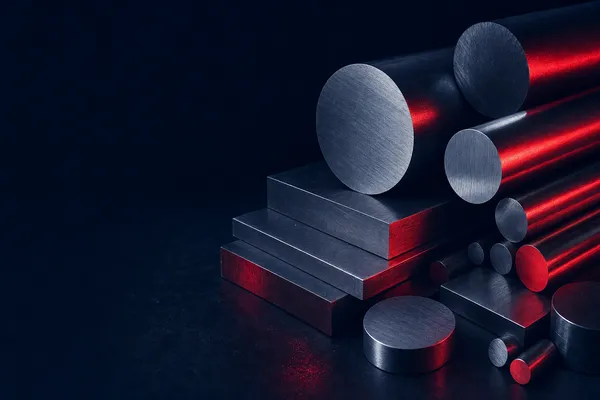
Side-by-side comparisons of 8 alloys we machine routinely — titanium, stainless, aluminum, alloy steel, Inconel, and PEEK. Mechanical properties, machinability, when to use which.
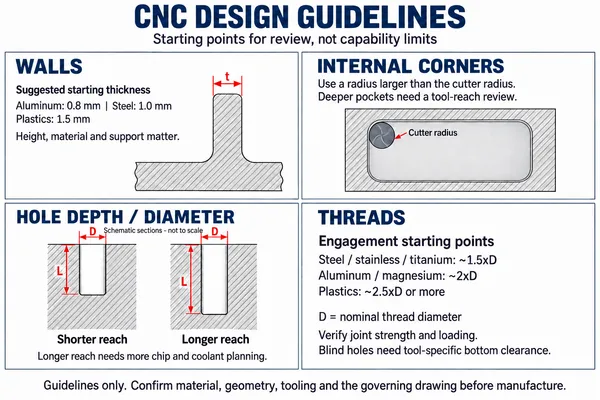
Wall thickness, hole depth-to-diameter ratios, internal corners, threads — the geometry rules that drive cost. Plus deep dives on CNC and Wire EDM specifically.

Annealing, normalizing, hardening, tempering, solution treatment, aging, case hardening. Process selection by alloy with the AMS / ASTM specs to call out.
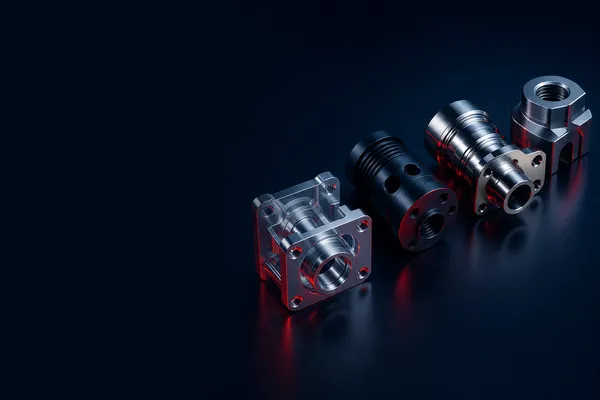
Anodize, plating, passivation, conversion coatings, powder coat, PVD, thermal spray. Material-specific tables, thickness scale, and design rules for build-up.

Ra ranges by process, when to specify polished vs as-machined, cosmetic vs functional finishes. Read this before you tighten the surface callout.
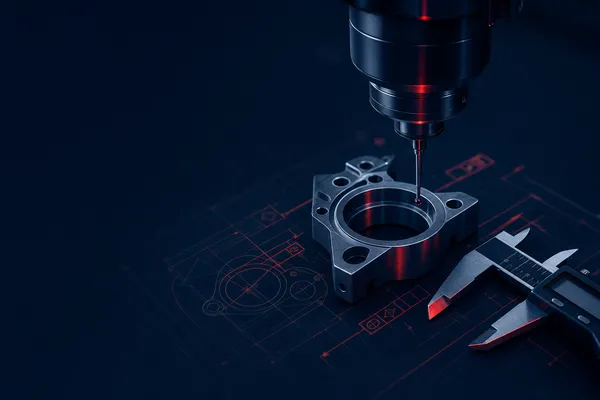
Tighter tolerances cost more — usually exponentially. See typical achievable tolerances per process, and where tolerance choices drive 80% of part cost.
Mill, turn, Swiss, EDM, or hybrid? A practical decision guide based on geometry, volume, material, and tolerance — with capability and lead-time guidance.
The full picture of how parts get made — machining, finishing, casting, forging, molding, additive. What we run in-house, what we coordinate, and when machining is the better call.
AS9100, AMS, ASTM, MIL-DTL, ITAR, DFARS, GD&T, AS9102 — what each spec body means and when it applies. Plus a 70+ acronym glossary for aerospace/defense drawings.
Rigorous, interactive visual calculators and lookups for sheet metal bending, surface roughness classes, ASME tolerance multipliers, and GD&T compartments.
Interactive
Live, no login, no download. Pure browser.

Filter 14 alloys by strength, weight, temperature, corrosion, and cost. See how requirements trade against each other.
Score your drawing against 32 manufacturability checks. Click items as you verify — see your score live before sending out for quote.
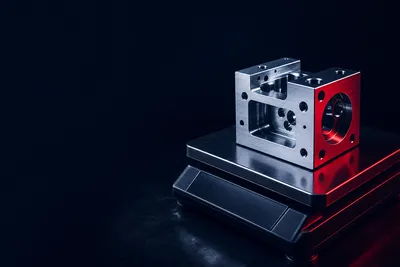
Calculate part weight from box, cylinder, or tube dimensions across 13 alloys.

Recommended SFM, RPM, and feed rate for milling, drilling, and turning across 12 materials.

Tap drill diameters for UNC, UNF, metric coarse, and metric fine threads. Search or filter by series.

Recommended assembly torque for SAE Grade 2/5/8, ISO 8.8/10.9/12.9, and stainless A2-70/A4-80 fasteners — adjusted for lubrication.

MRR (in³/min) for milling and turning. Includes spindle horsepower estimates for aluminum, steel, stainless, and Inconel.

Mix recipe for any sump size and concentration — split into concentrate and water with imperial / metric units.

Rough machining cycle time per part from envelope, removal %, material, and complexity. Planning-grade estimates across 24 alloys.

Where the dollars go — interactive split of material / setup / cycle / inspection / overhead, with reference patterns for common part types.

Ra ↔ Rz ↔ RMS ↔ CLA — convert between roughness scales (µin and µm), with process-attainability table.

Planning-grade lead time by part type, complexity, material, volume, and quality requirements. Phase-level breakdown.
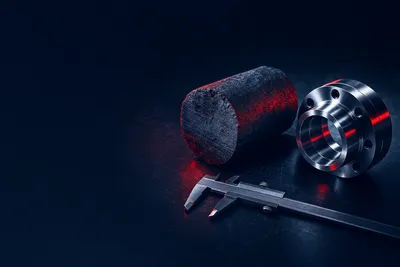
Per-side material allowance for finish-machining requirements. Inputs: nominal envelope, stock condition, surface finish, heat-treat plan.

Source-based gas-carburizing penetration estimates and measured hardness-depth interpolation, with explicit model limits.

Pressure drop across a precision-machined cooling channel. Reynolds number, friction factor, and ΔP for HPC cold plates and heat exchangers.

Add up to 12 stacked dimensions and see worst-case (arithmetic) and statistical RSS accumulated tolerance. Assembly clearance and datum-stack analysis.

Multi-feature position verification per ASME Y14.5. Computes actual position, MMC bonus from feature-size departure, and pass/fail across up to 8 holes.

Predict assembly clearance and interference at operating T. Multi-segment, multi-material stacks with 25 alloys — for cryo, satellite, and hot-section design.
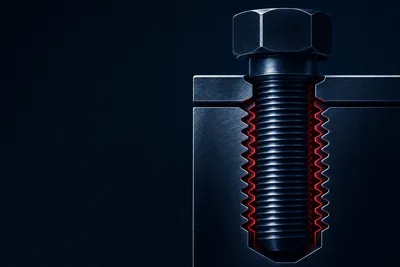
Minimum tapped-hole engagement so the internal threads don't strip before the fastener fails — by thread size, bolt grade, and tapped material. FED-STD-H28 strength basis plus the diameter rule of thumb.

Sheet-metal bend allowance, bend deduction, and flat-pattern length from thickness, inside radius, angle, and K-factor — with a gauge-to-thickness chart for steel, stainless, and aluminum.

Lamé contact pressure, press/holding force, transmissible torque, hub stress, and shrink-fit ΔT from shaft/hub geometry, diametral interference, and material pair.

12 quick questions on symbols, datums, modifiers, and which control to use — instant feedback with ASME Y14.5 explanations. See how print-room-ready you are.
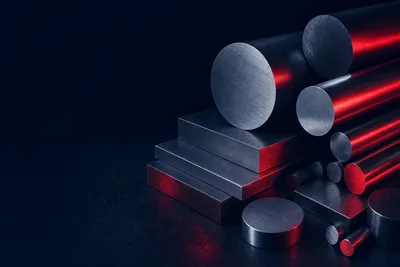
Per-alloy reference cards for 26 materials — mechanical, physical, machining, and finishing data per AMS/ASTM/MIL specs. Browser-printable to PDF for design reviews.
Title block layout, standard notes, GD&T frame templates, and revision conventions. Copy-paste-able language for your drawing template.
35 common questions about file formats, materials, tolerances, lead times, AS9100/ITAR, FAI, and pricing — search and filter.
Q1 2026 typical $/lb for all 24 materials we run, with cost-per-strength and cost-per-volume comparisons. Sortable bar charts.
Seven one-page visual references — milling vs turning, our six in-house processes, 17-4PH, the machinability ladder, gauge selection, feature control frames, and tolerance cost. Open in the browser, download any as PNG.
Reference data
Quick lookups for engineers and machinists — verified against published sources.
Aerospace Material Specifications by alloy, form, and condition — titanium, Inconel, 17-4PH, 4340, 6061, 7075, copper alloys. The most-cited specs for our 24-material catalog.
Rockwell C, Rockwell B, Vickers, Brinell, and approximate tensile strength — converted per ASTM E140 for steel.

Number, letter, fractional, and metric drills cross-referenced by decimal-inch equivalent. Sorted ascending — every standard size in one table.
UNC, UNF, metric coarse + fine, NPT, BSP, Helicoil — with major diameter and tap-drill recommendations for each thread.
Hole-basis preferred fits — H7/h6, H7/g6, H7/p6, H7/u6 etc. Tolerance bands, fit categories, and selection rules.
Density values for 75 engineering materials in g/cc, kg/m³, lb/in³ and lb/ft³, alphabetical for fast lookup. From nylon (1.14) to tungsten (19.25).
Linear coefficient of thermal expansion in ppm/°C and ppm/°F. From Invar (1.3) through engineering plastics (110+).
Young's modulus values in GPa and Msi. Use for deflection calculations, stiffness budgets, and material substitutions where stiffness — not strength — is the constraint.
Materials ranked anodic to cathodic in seawater. Use for dissimilar-metal corrosion analysis and sacrificial-anode selection.
ASTM material and test specs, MIL-DTL/PRF/STD documents, DFARS clauses, AS quality standards — plain-English scope for each.
The full GD&T characteristic set — the 12 current ASME Y14.5-2018 controls plus concentricity and symmetry (withdrawn in 2018, still seen on legacy drawings) — with definitions, datum requirements, and examples.
Recommended carbide end-mill feed per tooth (in/tooth) by tool diameter across seven material groups, with the IPM = RPM × flutes × chip load relationship and radial chip thinning.
Countersink major diameters (82° inch, 90° metric, 100° aerospace) for flat-head screws, plus socket-head cap-screw counterbore diameters and depths.
Close, normal, and loose clearance drill sizes for inch (ASME B18.2.8) and metric (ISO 273) fasteners, with decimal-inch and mm hole diameters.
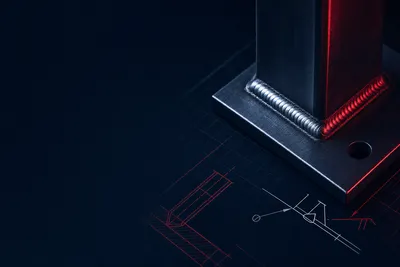
How to read a welding symbol per AWS A2.4 — reference line, arrow-side vs other-side, fillet and groove weld types, supplementary symbols, and dimension conventions.

Square and flat key sizes by shaft diameter per ANSI B17.1 + metric DIN 6885, with shaft keyseat and hub keyway depths, width fits, and a section-view diagram.
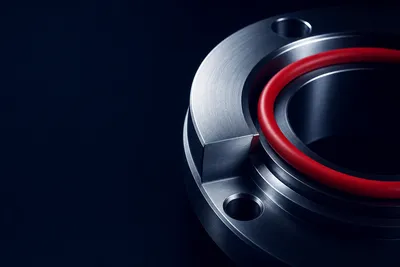
AS568 cross-sections with static radial and face gland dimensions per the Parker handbook — groove depth/width, squeeze %, surface finish, and gland-fill rules.
Comparisons
Side-by-side comparisons for the choices that drive cost.

Three nickel-based alloys for very different jobs — high-temp aerospace, aggressive chemistry, marine + cost. Side-by-side properties and decision rule.

Four common aging conditions for 17-4PH compared — strength, hardness, toughness, and stress-corrosion-cracking trade-offs.

The three most-cited aerospace aluminum alloys. 6061 is the workhorse, 7075 the strength champion, 2024 the fatigue champion.
Cast aluminum plate (stress-free) vs wrought 6061-T6 plate. When to pay 3× for stability vs structural strength.

Three non-traditional cutting processes compared. Wire EDM for sharp corners and hardened material. Sinker for cavities. Laser for thin sheet and non-metals.
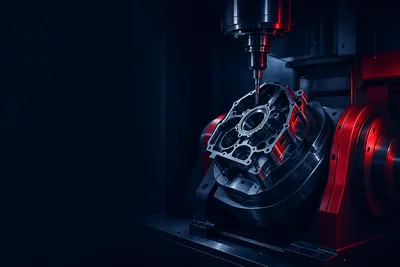
Same machine, two strategies. Programming complexity, surface finish, cycle time — and why much 5-axis work runs better as 3+2.

The guide bushing is the differentiator. L:D ratio, volume thresholds, and concentricity requirements that determine which to specify.
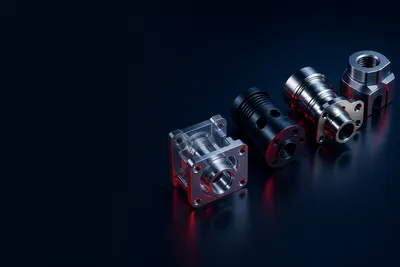
MIL-PRF-8625 (formerly MIL-A-8625) Type II (decorative) vs Type III (hard anodize). Thickness, hardness, color options, and dimensional growth.

ASTM A967 / AMS 2700 Method 1 vs Method 2. Effectiveness, alloy compatibility, environmental impact, and selection guidance.
The eight-tier ladder from 0.030″ commercial through 0.0001″ jig-grinding work. Cost multipliers, processes, and example applications for each tier.
Machining guides
Cutting parameters, tool selection, coolant strategy, and pitfalls.
Cutting parameters, tool selection (carbide / ceramic / CBN), coolant strategy, and common pitfalls. With a real-world turbine-vane example.

Cutting parameters, tooling, coolant + chip safety (titanium fire considerations), and ELI / Grade 23 medical implant guidance.

Cutting parameters by aging condition (Condition A through H900). Process sequence — when to age, when to finish-machine, when to wire-EDM hardened detail.

Cutting parameters in annealed, normalized, and Q&T conditions. The alloy-steel workhorse — landing-gear shafts, defense fasteners, race-car suspension hardware.
High-strength alloy steel for landing gear and aerospace structural fittings. Cutting parameters across conditions plus 300M variant guidance.
Pharma, marine, and surgical-grade austenitic stainless. Work-hardening avoidance, sharp tool discipline, citric passivation, electropolish process order.
General-purpose austenitic stainless. Faster than 316L (no Mo), same work-hardening discipline. Free-machining variant comparison.
Air-hardening tool steel for dies, punches, gages. Annealed cutting parameters plus the standard machine-then-heat-treat-then-wire-EDM sequence.
High-chromium die steel — wear-resistant in service, abrasive on tooling. Annealed parameters plus hardened-state EDM and grinding strategies.
The aerospace and structural workhorse. Polished-flute uncoated carbide, high SFM, flood or MQL coolant. Stress-relief and stability considerations.
High-strength aerospace aluminum. Cutting parameters, T6 vs T7351 temper choice, and stress-corrosion-cracking considerations for marine and humid service.
Chromoly — race-car frames, aerospace tubing, FAA-spec roll cages. Cutting parameters and the welding-first heat-treatment sequence.
Semi-austenitic PH stainless — the toughest of the common stainless grades. CH/RH/TH conditions, machine-then-age sequence.
Hot-work tool steel — die-casting cores, forging dies, plastic injection molds. Service hardness lower than A2/D2; conventional milling viable up to 44 HRC.
Classic aircraft skin alloy with outstanding fatigue resistance. Anodize quirks, alclad considerations, and SCC under sustained stress.
Stress-free cast aluminum plate. Optical mounts, metrology fixtures, vacuum hardware. Porosity and cast-structure considerations.
The lightest structural metal — and the most fire-prone. Required Class D safety procedures, oil-based coolant, and chip handling.

Electrolytic tough pitch copper for vacuum, RF cavity, cryogenic, and electrical applications. Sharp polished tooling and built-up edge avoidance.
The 100/100 machinability benchmark. Cutting parameters and the lead-content restrictions that rule it out for medical and food-contact work.
Leaded tin bronze (SAE 660) — the bearing-bronze workhorse. Cutting parameters, surface finish for sliding-wear applications, press-fit allowances.
Non-magnetic high-strength copper alloy. Mandatory beryllium safety procedures (HEPA filtration, PPE), Condition A vs aged cutting parameters.
Nickel-molybdenum-chromium superalloy — the worst-in-class machinability rating but unbeatable corrosion resistance. Same Inconel discipline, slower.
Nickel-copper marine and seawater workhorse. roughly half the cost of Inconel and a third of Hastelloy — galvanically compatible with copper alloys.

Engineering thermoplastics. Sharp tooling, no coatings, chip evacuation, and the coolant restrictions that prevent stress crazing on PEEK and Ultem.
Equipment
What we run on each machine — sweet spot, fixturing, and when not to pick it.
Trunnion 5-axis with 24×24×19.7″ envelope. Sweet spot for aerospace brackets, medical housings, and 5-sided complex parts in titanium, 17-4PH, and Inconel.
3–20mm bar capacity Swiss-type with sub-spindle and Y-axis. Sweet spot for medical bone screws, aerospace electrical pins, and L:D >4:1 small-diameter precision.
5-axis submerged wire EDM with rotary axis. The right tool for hardened tool steel dies, sharp inside corners, thin-wall flexures, and 0.0001″-class precision features.
See the full equipment list for every machine in the shop.
Our engineering principles
We review every drawing for manufacturability before quoting. A 5-minute conversation up front routinely cuts 20% off finished part cost.
Cost scales with tightness. Specify the precision your application actually needs — not what your CAD package defaulted to.
Stock cost, machining time, tool wear, and finish ops all change with material choice. We help customers pick the right one — sometimes that means challenging a spec.
A note on the data
Material properties shown across these pages are typical published values from widely-recognized sources (ASM Handbooks, MIL-HDBK-5J, MatWeb, supplier datasheets). Actual values vary by mill, heat treat, and lot. For mission-critical applications, request a certified material test report (CMTR) for your specific lot, and confirm property requirements with the relevant aerospace, medical, or military spec.
DFM guidance, tolerance ranges, and surface-finish rules reflect what we typically achieve on our equipment. We’re happy to push past these limits when the application warrants — talk to us before redesigning around them.
DFM review is free. Send a STEP file or a sketch — we'll flag manufacturability concerns and suggest material/process options before you commit.
Quotes in 24 hours