
Housings and enclosures
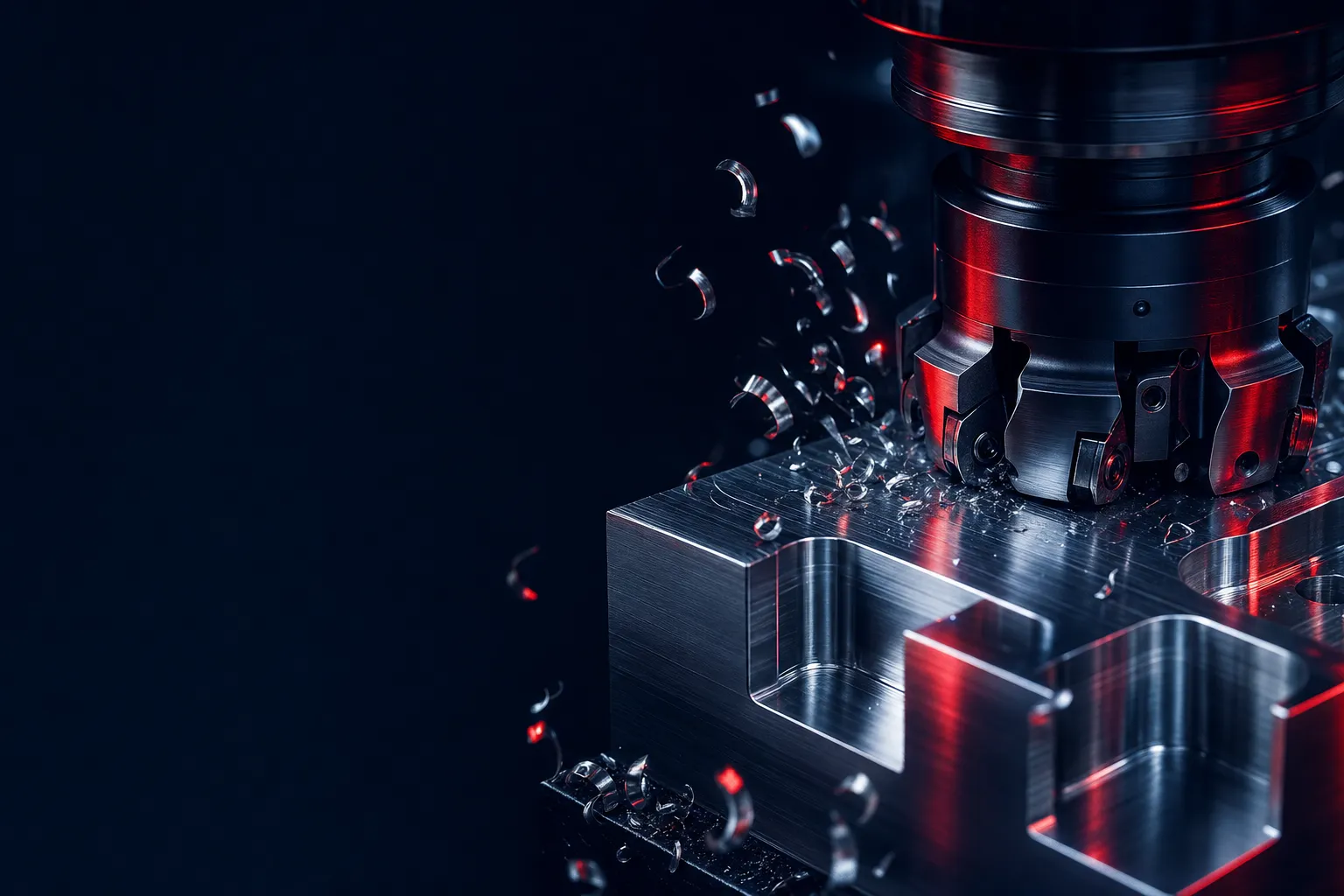
Electronics and mechanism enclosures with windows, internal bosses and thin walls, machined from solid billet on the 5-axis DVF 5000.
Capabilities · Materials
Production machining of 6061, 7075 and MIC-6 aluminum — housings, heat sinks, brackets and manifolds on 5-axis, 4-axis and mill-turn machines in Buellton, California. Type II and Type III anodize and chem film are coordinated through vetted finishing partners; where a finish adds thickness, the coated diameters are machined to allow for it.
Need this part made in aluminum? Get a quote01 · Alloys and stock forms
Call out the alloy, temper and specification on the drawing — "6061-T651 per AMS 4027", not "aluminum". Temper decides how the part moves when material comes off, and the spec decides what certification arrives with the bar.
| Alloy / temper | Forms (spec) | Why specify it |
|---|---|---|
| 6061-T6 / T651 | Plate (AMS 4027), bar (AMS 4117) | The default: good strength, excellent machinability and corrosion resistance, and it anodizes well. T651 plate is stress-relieved by stretching, which helps it stay flat after heavy pocketing. |
| 7075-T651 / T7351 | Plate (AMS 4045, AMS 4078), bar (AMS 4124) | Higher strength for loaded brackets and fittings. T7351 is overaged and stress-relieved: lower peak strength than T651, but better stress-corrosion resistance and stability after machining. |
| MIC-6 cast plate | Cast tooling plate | Cast and stress-relieved, so it stays flat when heavily machined. The pick for fixture plates, optical mounts and inspection bases where flatness matters more than strength. |
Material is bought from approved aerospace metals distributors with certified mill test reports (CMTR / EN 10204 3.1) traceable to heat lot. Comparing alloys? See 6061 vs 7075 vs 2024 and MIC-6 vs ATP-5 vs 6061.
02 · Typical parts
Production runs from 1 to 10,000 pieces, prototypes included. Repeatable parts run lights-out on the DVF 5000’s 8-pallet pool, and repeat part numbers can run under long-term agreements, Kanban or just-in-time releases, with safety stock to handle demand fluctuation.
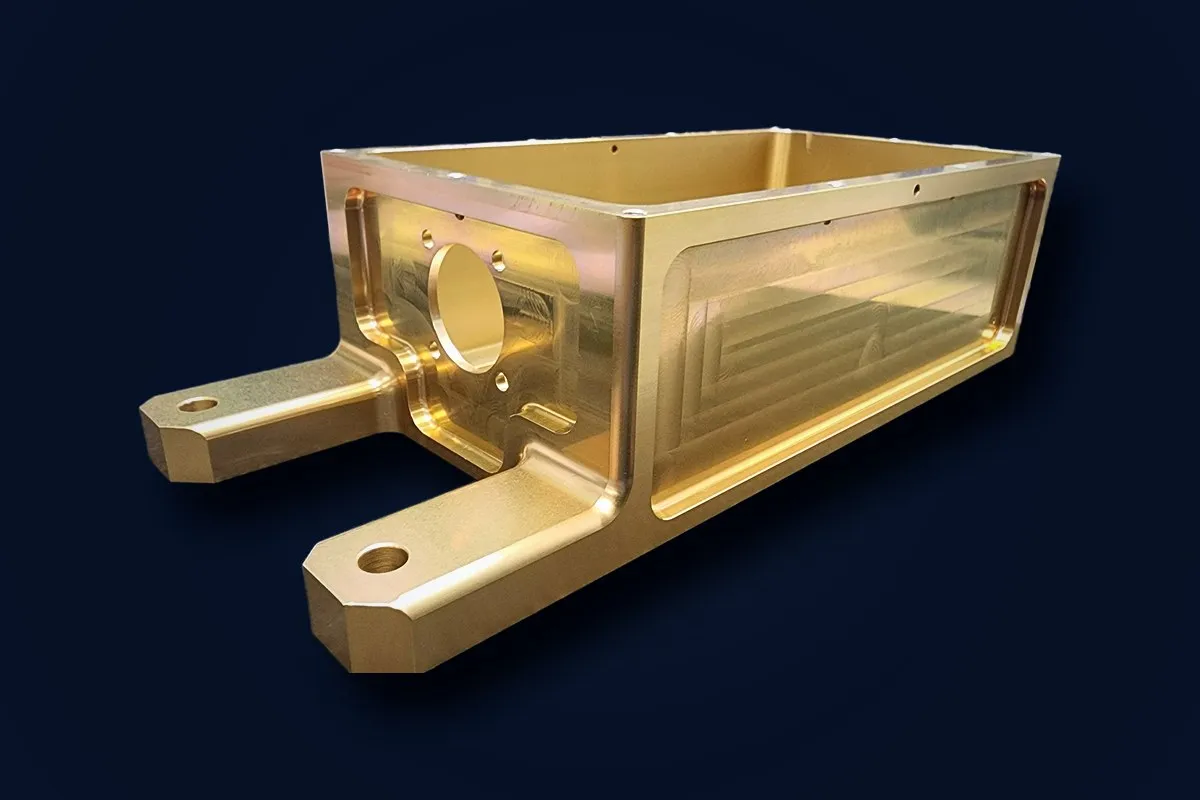
Electronics and mechanism enclosures with windows, internal bosses and thin walls, machined from solid billet on the 5-axis DVF 5000.
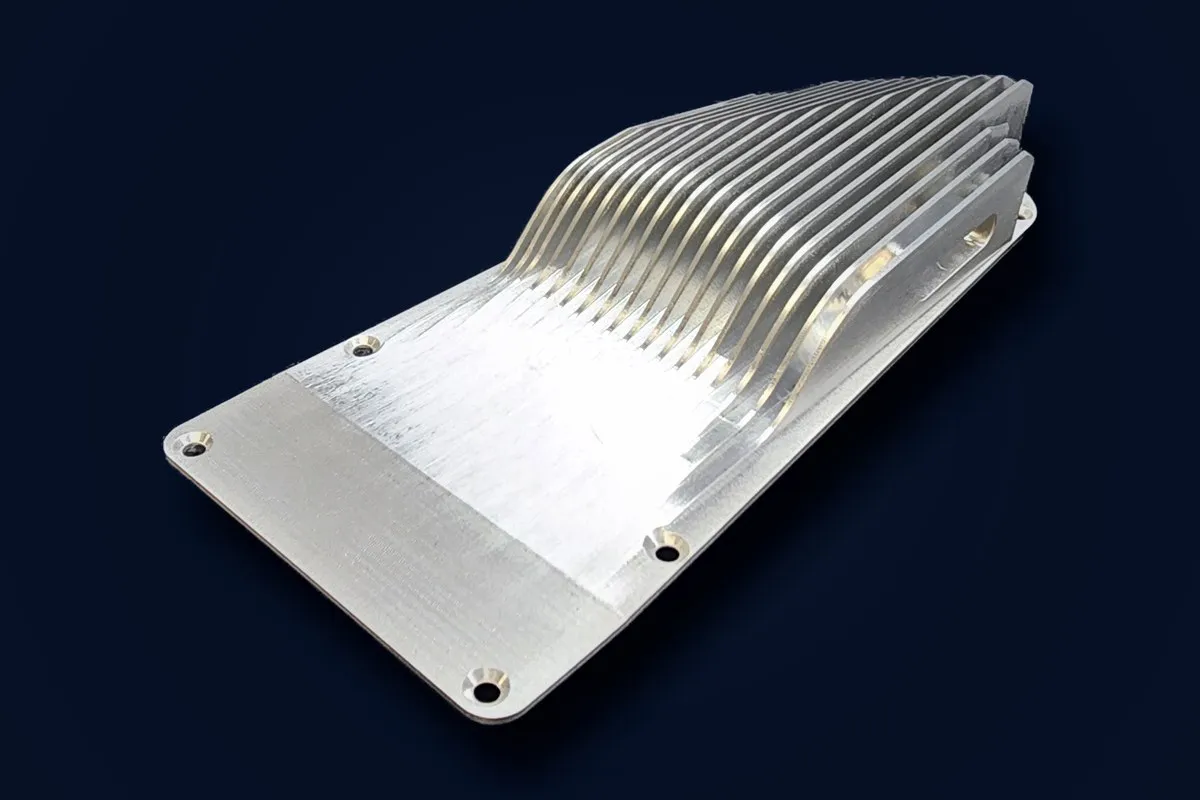
Slit-saw fins cut on a domed profile on the DNM 4500S, and 5-axis heat sinks with a flat contact face and mounting holes true to it.
Structural brackets and drone clamp yokes machined from one fixturing on the Kitamura trunnion, so bores and mounting feet stay true to each other.
Deep-bore manifolds with internal flow geometry and cross-drills, machined in a single setup on the DVF 5000.
Matched pairs of prism-mount plates run together in soft jaws on the horizontal machining center, so the seating faces match.
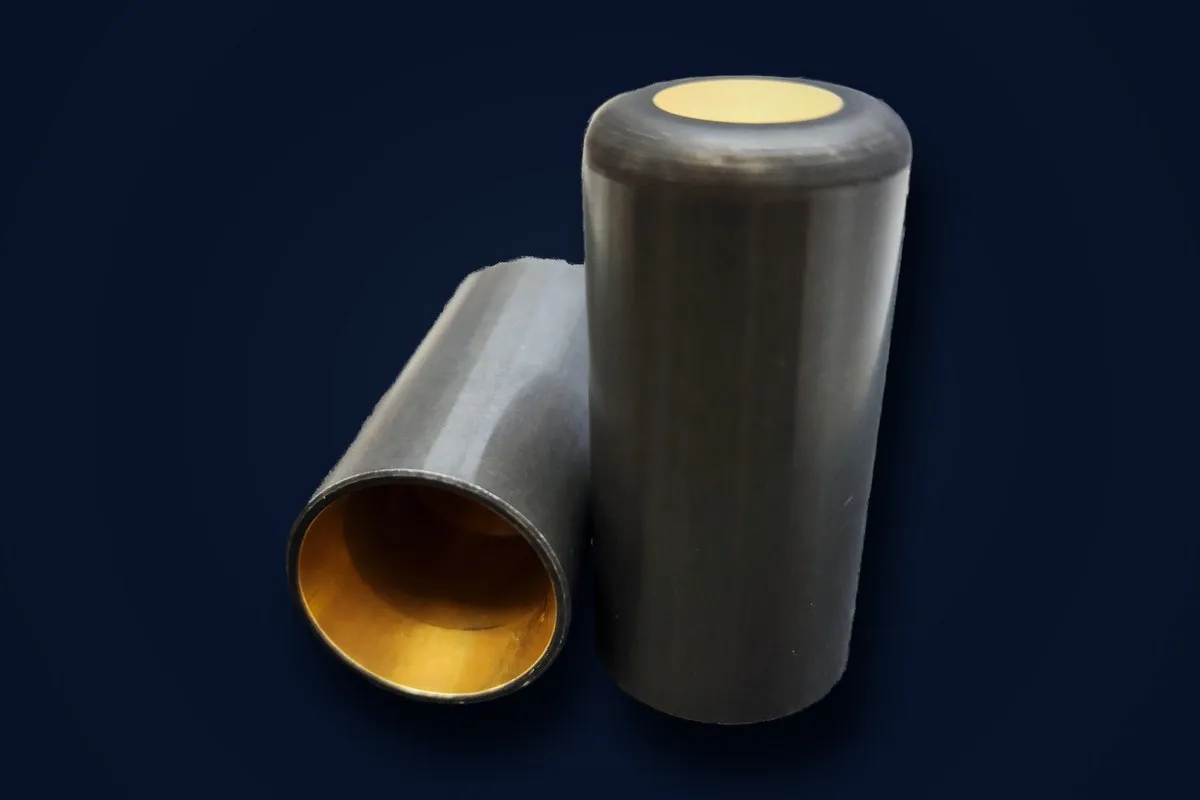
Pistons and flanged tubes on the SMX 2600ST turn-mill, with masked hardcoat and chem film coordinated through partners.
Off our floor
03 · Keeping it flat
Plate carries residual stress from rolling and quenching. Take most of the material off a slab and the part can move as that stress releases. The usual controls:
Milling equipment:
04 · Finishing
Anodize, chem film and plating are special processes at vetted (incl. Nadcap) partners, not done in-house. Hardcoat grows the surface, so coated diameters are machined to allow for it, and masked areas belong on the drawing. Bead blast and tumble deburr are done in-house.
| Finish | Spec | Thickness | Best for | Done by |
|---|---|---|---|---|
| Type II anodize (sulfuric) | MIL-PRF-8625 Type II (formerly MIL-A-8625) | 0.00007–0.001″ total (~½ builds up) | General corrosion + cosmetic. Black, clear, and dyed colors. | Vetted partner |
| Type III hardcoat | MIL-PRF-8625 Type III (formerly MIL-A-8625) | 0.0005–0.0045″ total, 0.002″ nominal (~½ builds up) | Wear surfaces, fluid contact, long-term outdoor exposure. Thick, dark gray to black. | Vetted partner |
| Chem film (chromate) | MIL-DTL-5541 Type I, Class 1A or 3 | 0.00001–0.0001″ | Corrosion resistance + electrical conductivity (grounding). Yellow to gold. | Vetted partner |
| Trivalent chromate (RoHS) | MIL-DTL-5541 Type II (TCP), Class 1A or 3 | 0.00001–0.0001″ | Same as chem film, RoHS-compliant alternative to hex chrome. | Vetted partner |
| Electroless nickel | AMS 2404 | 0.0003–0.002″ | Wear + corrosion + dimensional build-up. ~500–600 HV as plated. The hardening bake that takes EN to ~850–1000 HV on steel would overage heat-treated aluminum — on aluminum, AMS 2404 Classes 3–4 are low-temperature adhesion bakes, so plan on as-plated hardness. | Vetted partner |
How to call each finish out: finishing callout guide · Type II vs Type III anodize · coatings & finishes reference
Related
Speeds, feeds, tooling and AMS callouts.
T6 vs T7351, residual stress and anodize.
Properties, flatness and machining notes.
DVF 5000 pallet pool and Kitamura trunnion.
Kanban, long-term agreements and safety stock.
Aluminum and copper thermal hardware.
Send the alloy and temper, quantity per release and finish callout. We'll plan the stock, the setups and the finishing partner, and quote it.